
Presented by Hanna Chuchvaha (University of Calgary)
Chernobyl has a symbolic meaning for several generations of east Europeans. It is both the place of the catastrophic nuclear explosion, a representation of a post-apocalyptic landscape, and an eloquent demonstration of the Anthropocene. The mainstream of artistic investigation, which is well known in the West, is realized mostly in photography and film. The predominant practice of artists is to travel to the site and to document what they see, to grasp the meaning of this catastrophe and sometimes to assume the roles of prophets to warn humanity. Others document images of destruction—petrified ruins and abandonment, rare impoverished re-settlers—and expound the nature of Chernobyl as a counter-reality, creating possible alternatives to Chernobyl in their art. Their artworks regularly get attention from scholars and are discussed in many publications.
However, yet another category of artists aims to explore and to explain Chernobyl, not as observers but as witnesses, or even as participants of the tragedy. For them Chernobyl is a part of their being, their soul, and their blood. These artists think of the consequences of Chernobyl in terms of their personal emotional and physical experiences. They are not visitors to the scene, who come to feel a thrill from the abandoned town of Prypiat and its surroundings, they are Belarusian and Ukrainian artists for whom Chernobyl epitomizes the point of non-return, the overwhelming tragedy of their people and the devastation of their land; for whom Chernobyl is an inverted metaphor of the legitimacy of the peaceful atom and the results of the Anthropocene.
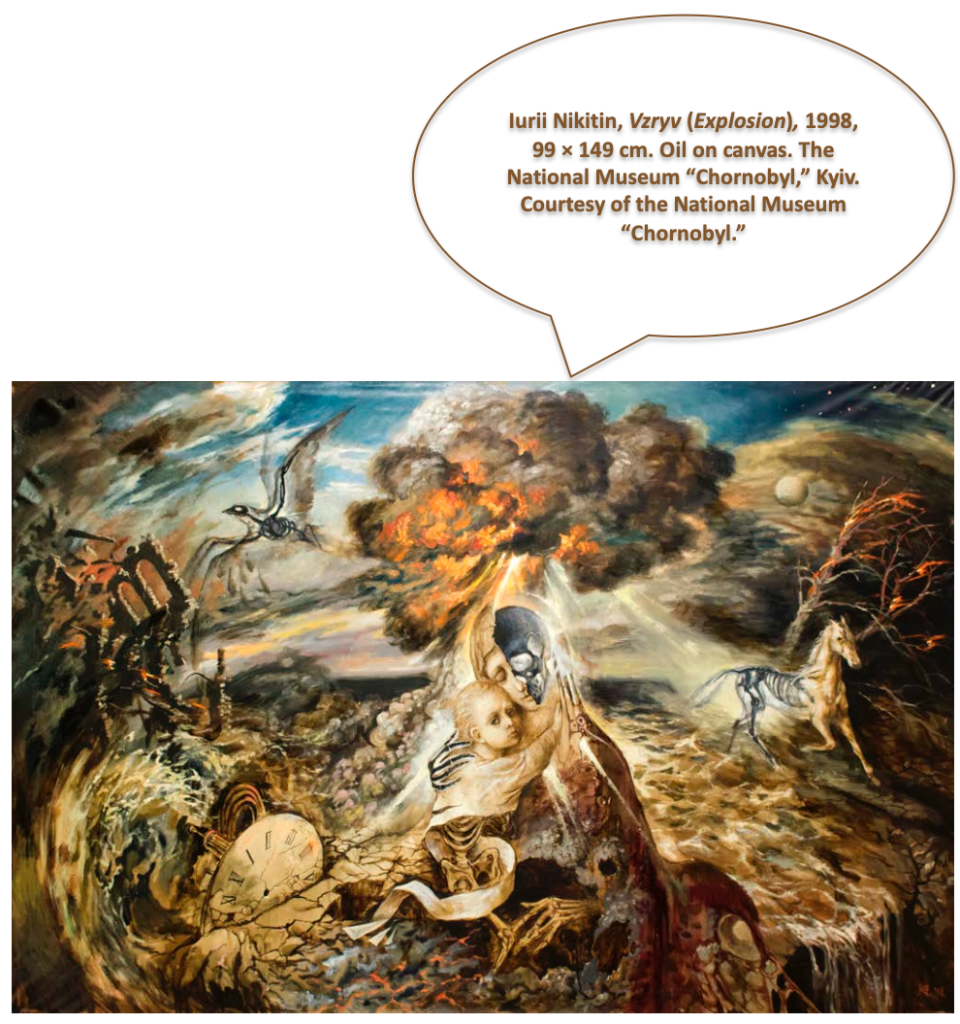
This paper analyzes post-Chernobyl art of trauma created by witnesses or “chernobyl’tsy”—the artists who associated themselves with the disaster on various levels—and traces the visual messages and meanings of trauma that recur in many art works. It focuses on late Soviet and post-Soviet art works produced within the three decades of the disaster. This paper employs Griselda Pollock’s theoretical approach to trauma in relation to the maternal, and centres on images of mothers and motherhood as visual tropes of trauma.
 Cercle Benveniste Circle
Leave a comment